|
Getting your Trinity Audio player ready...
|
The way people discover, research, and buy things in the Middle East has completely changed over the last few years. Screens are everywhere. Attention spans are shorter. And the competition for a consumer’s time online has never been this fierce.
Digital marketing trends in the Middle East are moving at a pace that is genuinely hard to keep up with — unless you are paying close attention. What worked eighteen months ago may already feel outdated today. The brands that are growing right now are the ones that spotted the shifts early and moved with them.
This blog is a straight-talking look at what is actually happening in the digital space across the UAE, Saudi Arabia, and the wider GCC and what it means for your marketing strategy in 2026.
The Middle East Is One of the Most Connected Regions in the World
Before diving into the trends, it helps to understand just how unique this region is as a digital market. The UAE and Saudi Arabia consistently rank among the highest in the world for smartphone penetration, social media usage, and time spent online per day.
Online consumer behavior GCC has shifted dramatically. Consumers here are not passive scrollers. They are active, engaged, and making real purchasing decisions based on what they see on their phones. This makes the digital channel not just important it makes it essential.
For brand managers and marketing heads working in this region, understanding what is changing in the digital space is not optional. It is the difference between growing and standing still.
Top 6 Digital Marketing Trends in the Middle East Businesses Should Know About
Trend 1: Short Video Is Now the Loudest Voice in the Room
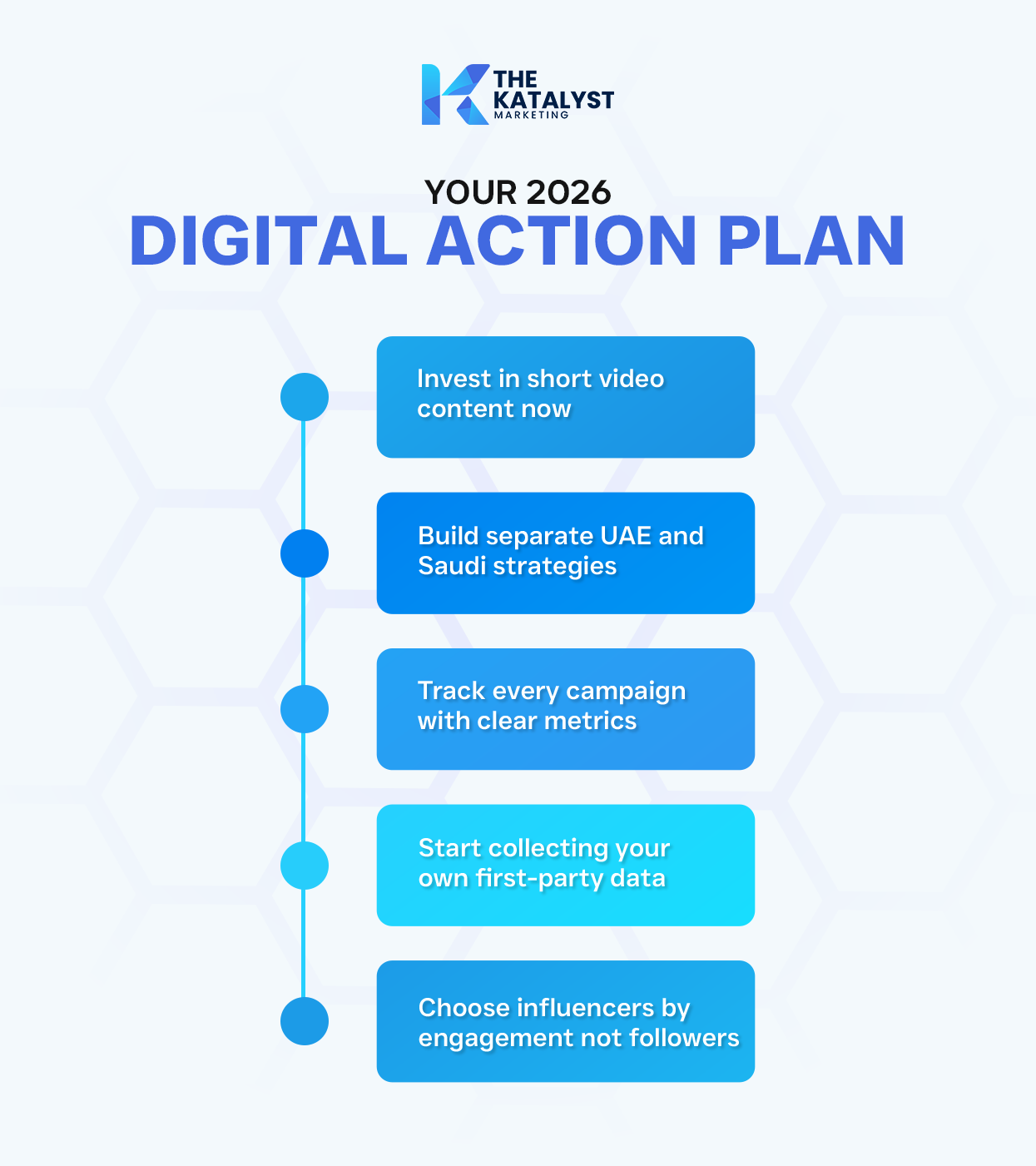
If you are not putting serious effort into short-form video content, you are already behind. TikTok, Instagram Reels, and YouTube Shorts have completely taken over how people consume content across the GCC.
Social media marketing UAE in 2026 is built heavily around video. Not long, polished productions short, real, engaging clips that feel human and immediate. Brands that have mastered this format are seeing far higher engagement than those still relying on static posts and captions.
The shift is not just about format. It is about pace and authenticity. Audiences here can tell immediately when something feels forced or over-produced. The content that performs best is honest, fast, and gives the viewer something genuinely useful or entertaining within the first two seconds.
Trend 2: Performance Marketing Is Getting Smarter
Brands across the Middle East are becoming a lot more careful about where their ad budgets go. The days of running a campaign and hoping for the best are fading fast. In 2026, performance marketing Middle East is all about measurable results and real return on every dirham spent.
Meta, Google, TikTok, and Snapchat are all being used more strategically with tighter audience targeting, cleaner creative testing, and sharper conversion tracking. Brands that know their numbers and optimize constantly are getting far better results than those spending big without a clear measurement framework.
This is good news for brands willing to invest in the right setup. Explore our digital marketing services to see how a performance-first approach can change what your ad budget actually delivers.
Trend 3: Saudi Arabia’s Digital Market Is Exploding
For years, UAE was the headline digital market in the region. That story is changing fast. Saudi digital trends in 2026 point to one of the fastest-growing online advertising markets anywhere in the world.
A young population, very high smartphone usage, and a government actively pushing digital transformation have created a market where brands can grow remarkably fast if they move with the right strategy. E-commerce, food delivery, entertainment, beauty, and fashion are all seeing massive digital growth in the Kingdom.
Brands already established in the UAE that have not yet built a Saudi-specific digital strategy are leaving a significant opportunity on the table. The two markets need different approaches different platforms, different content styles, and different consumer triggers.
Trend 4: AI-Powered Marketing Is Moving From Experiment to Everyday
A year or two ago, AI tools in marketing felt like something only large global agencies were using. In 2026, they are becoming part of how everyday marketing teams in the Middle East operate and the gap between those using them and those not is widening quickly.
From content creation and audience segmentation to ad optimization and customer journey mapping AI is helping marketing teams move faster and make better decisions. UAE online advertising campaigns that incorporate AI-driven tools are consistently outperforming manually managed ones in both efficiency and results.
The key is not to let AI replace the human thinking behind a strategy. The brands getting the most from these tools are using them to do more with their existing teams not to cut corners on creativity or audience understanding.
Trend 5: First-Party Data Is Becoming the Most Valuable Asset a Brand Has
Privacy changes across major platforms have made one thing very clear brands that have been relying on third-party data to reach their audiences are now in a difficult position. In 2026, digital marketing trends across the Middle East are pointing strongly toward first-party data as the foundation of smart marketing.
First-party data simply means information a brand collects directly from its own audience through its website, loyalty program, app, or in-store interactions. This data is more accurate, more reliable, and not at risk from platform privacy changes.
Brands that invest in building genuine relationships with their audiences through newsletters, loyalty programs, direct engagement, and owned channels are building something that no algorithm change can take away. You can see how this works in practice by looking at successful online advertising campaigns that combine owned data with smart digital execution.
Trend 6: Influencer Marketing Is Maturing Fast
The influencer space in the Middle East has gone through a big reset. The era of paying large sums to mega-influencers for a single post and hoping for results is largely over. What is replacing it is far more strategic and, honestly, more effective.
Brands in the UAE and Saudi Arabia are now working with carefully selected mid-tier and niche creators who have genuine trust with their specific audience. The focus has moved from follower counts to engagement quality, audience fit, and measurable outcomes.
This mature approach to influencer strategy combined with performance tracking is delivering much stronger results for brands willing to be selective and patient. Working with digital marketing experts in the Middle East who understand this landscape makes the difference between a campaign that looks good and one that actually converts.
Conclusion
Digital marketing trends in the Middle East are not slowing down. If anything, the pace of change is picking up and brands that treat their digital strategy as something to revisit once a year will find themselves consistently behind.
The region has a digitally native, highly engaged consumer base that responds to brands showing up with relevance, consistency, and creativity. The tools are better than they have ever been. The platforms are richer. The data is more accessible. The opportunity is genuinely large.
The question is whether your brand is positioned to make the most of it. If you are ready to build a sharper digital strategy for 2026, speak with our digital strategy team and see how The Katalyst digital marketing agency can help your brand grow across the UAE, Saudi Arabia, and the wider GCC.