|
Getting your Trinity Audio player ready...
|
The Store Has Changed — Has Your Strategy?
The experience of stepping into a retail environment today has changed from just a few years back. The retailers that are enticing consumers, holding their attention, and filling up their shopping baskets are no longer about the merchandise they are offering. Instead, they are about creating experiences. They are about storytelling. They are about delivering emotion.
Retail marketing has undergone an actual change — and the evolution is by no means over. The companies that have been successful at occupying shelf space, driving foot traffic, and cultivating loyalty in customers have done so because they identified those trends early enough and reacted to them. Those who have stuck to the old ways of doing things are struggling to keep up.
No matter whether you operate a single store or multiple retail environments for your brand, having a clear idea of how things have evolved in retail is essential for any future strategy to be successful in 2026.
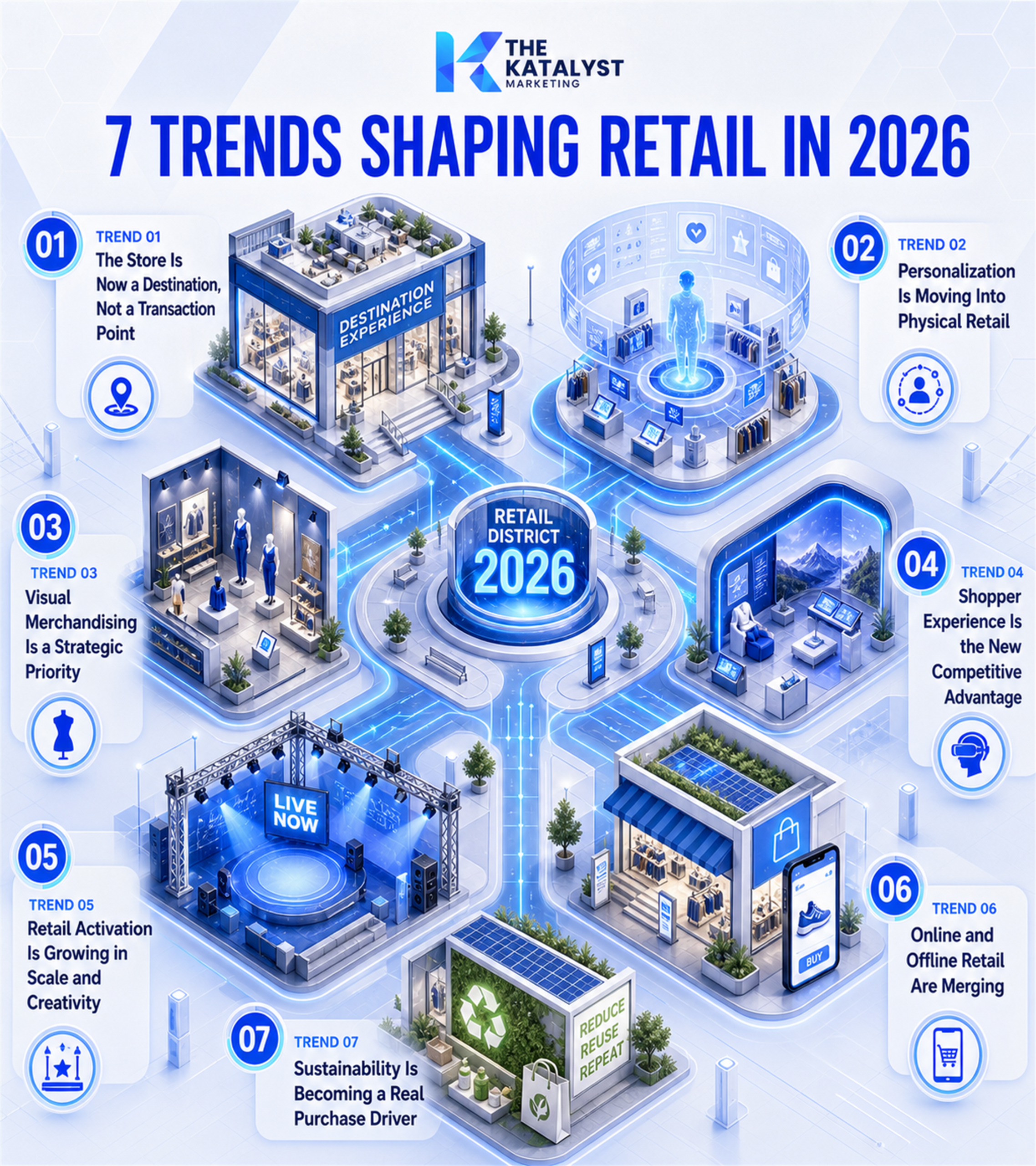
Trend 1 — The Store Is Now a Destination, Not Just a Transaction Point
Customers do not even need to go into a brick-and-mortar store anymore to purchase items. They can shop online, arrange for delivery within the same day, and sit back on their sofas. The implication is that the ones who still go into stores make a conscious decision – a decision to look for an experience in these stores.
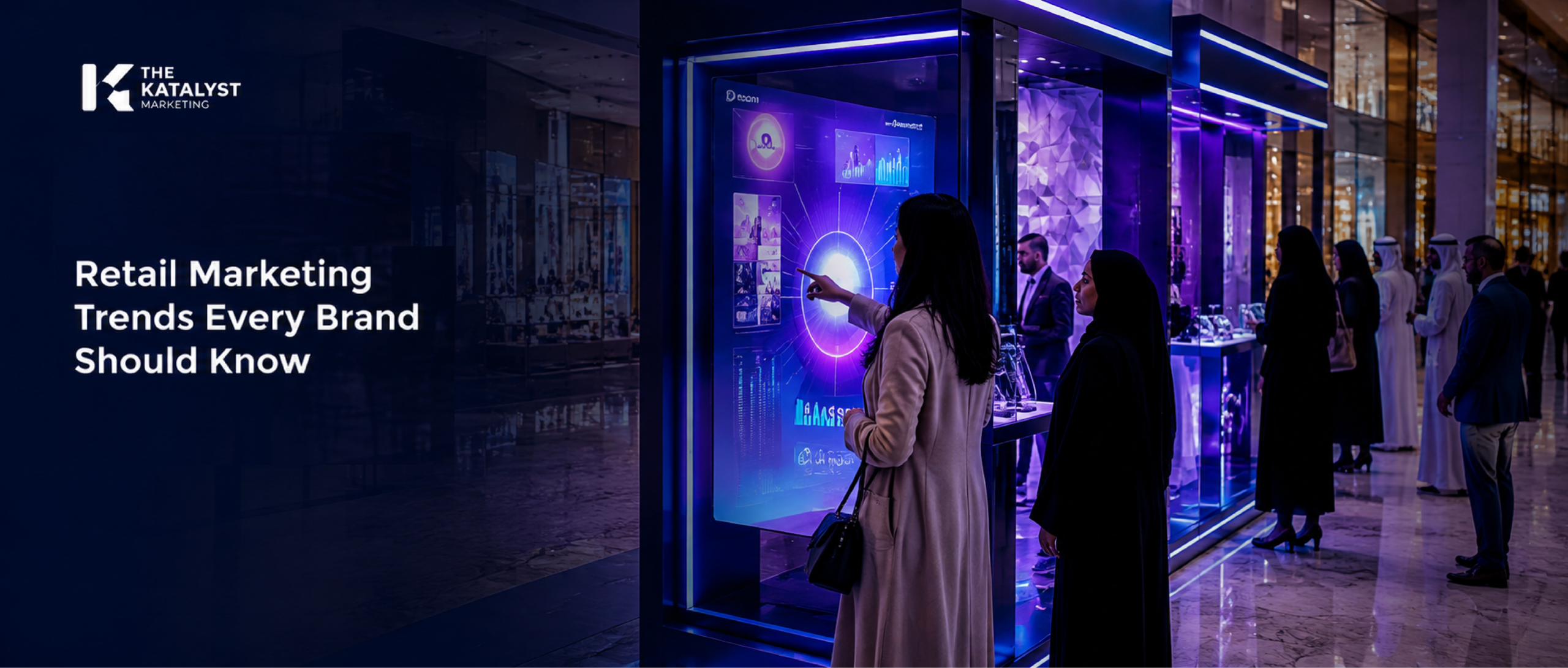
The in-store marketing concept has reacted to this change by transforming itself from a pure transactional approach to a destination concept. Companies now create truly unique environments for customers that feature interactive areas, product experiences, visual storytelling, and other factors that one cannot achieve using just an online shopping cart.
In fact, it is even more pronounced in the case of the UAE, since its malls and retail areas are created as destinations themselves. People in the UAE really do spend their time in stores rather than just grabbing and leaving. It turns out that retail brands that take this fact into account in designing their in-store environment sell more.
Trend 2 — Personalization Is Moving Into the Store
Personalization used to be an Internet affair – personalized offers from emails, product recommendations from your browsing history, and so on. But in 2026, such a concept will be introduced into the brick-and-mortar retail environment.
The retail marketing strategy will be using loyalty data, purchase history, and location-based behaviors to personalize their in-store experience. Personalization could involve sending promotions to certain segments of consumers at a particular store location, or developing product lines based on consumer preferences of that store’s surrounding community.
Why Relevant Feels Better Than Broad
The customer who feels like the store knows them – their tastes, their style, their way of life – is a customer who will return. Mass marketing campaigns and standard displays have their place, but the brands that give an extra level of relevance have gained much more loyalty from their customers than the others.
Trend 3 — Visual Merchandising Is Being Taken More Seriously
Visual merchandising once used to be an afterthought — a thing that one could do rapidly after taking care of other marketing aspects. All of that is over and done with. By 2026, visual merchandising will get the same consideration as all other forms of marketing.
Retail branding that invests in strong visual merchandising — Cohesive color systems, well-defined hierarchy of information, high-quality materials, and innovative design will always beat products that use a basic or run-down display system. The shelf is a form of media. The brands that understand the importance of this medium are the ones that will get the most attention.
Visual merchandising is more than just about appearances. Good visual merchandising creates an association with quality and recognition and makes it easier for shoppers to make purchasing decisions. If shoppers can identify your product immediately and understand what it has to offer, and associate some type of positive image with it, then the sale becomes much easier to make.
Trend 4 — Shopper Experience Is the New Competitive Advantage
What the Shopper Feels Decides What They Buy
When people are asked why they repeatedly go to certain stores, they seldom say it is due to their having the best prices. Instead, their responses range from statements like — “It simply feels good,” or “They are always so nice to you,” or “I always discover something I didn’t even know I needed.” All such reasons point to experience rather than products or prices.
Shopper experience has emerged as one of the most compelling competitive differentiators possible within the context of retailing. Companies investing in the shopper experience – right from the time shoppers walk into the store till the time they leave after checkout – have created an intangible asset that is very difficult for their competition to emulate. Price is easy to match; experience is tough to replicate.
Small Touches Create Big Impressions
The experience doesn’t have to be grandiose in order to achieve success. Cleanliness and organization of the presentation. Helpful and knowledgeable staff. A sample station where customers can taste before purchasing. Quick checkout process that respects your time as a shopper. It all adds up to create an experience that will bring you back for more.
Customer experience in retailing is made up of hundreds of small decisions – those that take care of all of them wind up with a truly unique customer experience that manifests itself in sales figures and customer loyalty.
Trend 5 — Retail Activation Is Growing in Scale and Creativity
The mere presence of a branded display was sufficient. All you had to do was place your product at eye level with an attractive shelf talker. Times have changed since then. People now react to retail activation that is truly creative and surprising — something that amazes them, involves them, or leaves them with an interesting tale to tell when they step out.
Pop-up events in hypermarkets. Interactive demonstrations for products that create a crowd around them. Seasonally-themed branded zones that turn a corner of the store into a picture-taking opportunity. This is the kind of retail activation that not only sells but creates organic social media activity and brand awareness well beyond the life cycle of the promotion itself.
For FMCG companies, particularly, spending on retail activations that take more effort than just putting up an ordinary gondola display is making a significant difference in their ability to differentiate themselves from other brands.
Trend 6 — The Line Between Online and Offline Retail Is Disappearing
One of the most dramatic developments within what has been defined as retail marketing is the merging of the line between digital and physical retailing. Customers move between the two worlds constantly, observing products via social media, reading reviews on the Internet, and visiting shops in order to try them out before making purchases.
The strategy of retail engagement, which does not recognize the connection between digital and physical, fails to see the whole picture. Today’s most successful retailers in the UAE have built a seamless connection – from QR codes on shelf displays leading to informative content about the product to simultaneous promotion through digital media, and loyalty programs that function in both worlds.
Such an approach ensures that the brand presence will accompany each step of the customer’s journey – not only in case the customer happens to be in the aisle. This ubiquitous presence creates a sense of familiarity, which becomes the source of trust necessary for purchase.
Trend 7 — Sustainability Is Becoming a Retail Reality
The latter is proving to be one that is growing at a speed even faster than anticipated — especially amongst young consumers within the UAE and larger GCC region. They are becoming aware of packaging, origin, and the true ethos of brands associated with a particular product, besides their claims about the product.
Retail Advertising and in-store communications that communicate sustainability messages that are authentic and true are proving to have a greater impact on this rising trend of consumers. No greenwashing; just real commitments that are verified by a brand and communicated in an authentic way. Those who do it now will reap its benefits later on.
Conclusion
Retail marketing in 2026 is not just about getting a product onto a shelf and hoping someone picks it up. It’s about providing an experience that’s worth having, a brand that’s worth buying, and a store that’s worth going back to.
Today’s trends affecting retail – destination retail stores, customer personalization, innovative activations, integration between offline and online experience, and sustainability – are all going in one direction. The brands that see retail as a strategic opportunity rather than as a necessary evil are the ones developing a competitive advantage.
If you’re ready for a change in your brand’s approach to retail, talk to us today. Our Katalyst Retail Marketing team can help create retail strategies that increase customer engagement, bring in traffic, and boost sales in UAE and GCC markets.