The Sale Is Decided Closer to the Shelf Than Most Brands Plan For
An FMCG brand can run strong advertising, win attention online and still lose the sale in the final few seconds in the aisle. That is the gap shopper marketing GCC brands use to turn interest into purchase. It focuses on the person standing in front of the shelf, the moment they choose between your product and the one next to it, and everything that influences that choice inside the store.
For fast-moving consumer goods, where products are similar, prices are close and loyalty is easily tested, that moment matters a great deal. A well-planned shopper marketing program gives your product the visibility, reason and confidence a shopper needs to pick it up.
This article explains what shopper marketing means for FMCG brands, why the GCC needs a local approach, and the practical ways it can increase sales in hypermarkets, supermarkets and convenience stores across the region.
What Shopper Marketing Means for FMCG Brands
Consumer marketing speaks to people as users of a product, at home, on their phones or on the road. Shopper marketing speaks to the same people in a different role: as buyers, inside a store, with a basket and a list. Their mindset in that moment is practical. They are comparing, checking prices, looking for offers and often deciding quickly.
FMCG shopper marketing brings together the tools that influence that decision: shelf placement, secondary displays, point-of-sale materials, sampling, promotions, in-store brand ambassadors and retailer partnerships. It also works closely with trade marketing, which manages the commercial relationship with retailers, but its focus is the shopper rather than the store buyer.
If you are new to the topic, our article on what shopper marketing is and how it increases retail sales covers the fundamentals.
Why Shopper Marketing GCC Strategies Need a Local Approach
Retail in the Gulf has its own character, and a program copied from another region rarely performs as well as one built for local shoppers. Three things stand out.
A Wide Mix of Retail Formats
Large hypermarkets, supermarket chains, neighborhood groceries, cooperative societies in markets such as the UAE and Kuwait, pharmacies and online grocery platforms all play a role. Each format has different shopper missions, space and rules for in-store activity, so the mechanics that work in a hypermarket may not fit a small grocery store.
A Diverse, Multicultural Shopper Base
Shoppers in the UAE and the wider GCC include Gulf nationals and residents from many countries, each with their own brand familiarity, language and buying habits. Effective shopper marketing UAE programs usually work in both Arabic and English and reflect the specific communities that use each store.
A Calendar Built Around Key Moments
Ramadan, Eid, back to school, national days and the summer season all change what people buy and how much they buy. Planning activity around these moments, and booking in-store space early, is a core part of retail marketing GCC brands can rely on.
Seven Ways Shopper Marketing Increases FMCG Sales
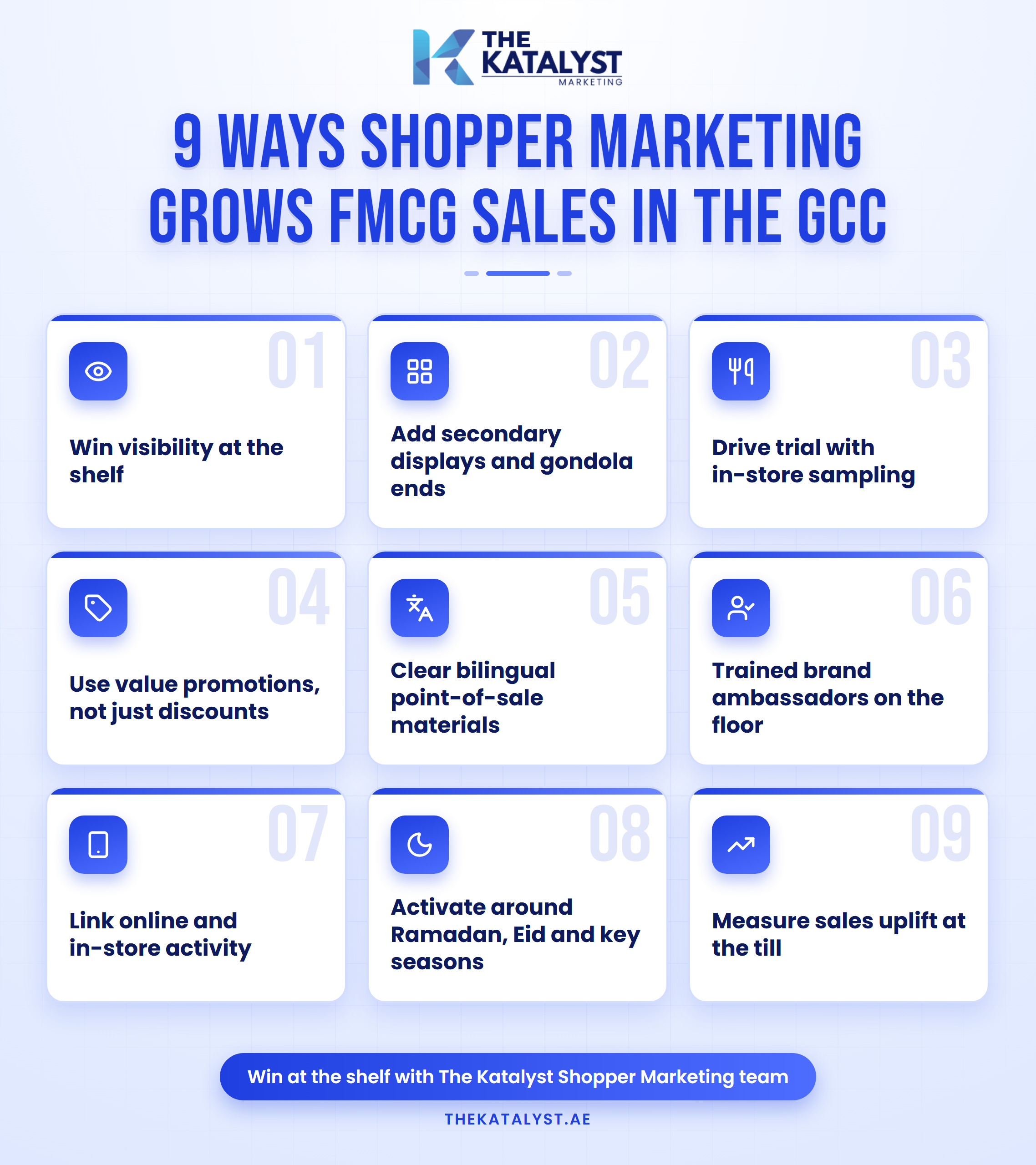
1. Win Visibility at the Shelf
Shoppers cannot buy what they do not notice. Securing the right shelf position, keeping stock full and faced, and adding secondary displays such as gondola ends, floor stands and promotional bays all increase the chance that your product is seen at the moment of choice.
2. Drive Trial Through Sampling
For new launches, new flavors or brands entering a category, tasting or trying a product removes the risk of buying something unfamiliar. Sampling led by trained staff, with a clear call to action and the product available nearby, turns curiosity into a purchase.
3. Use Promotions That Build Value, Not Just Discounts
Price cuts can lift sales in the short term, but repeated discounting can train shoppers to wait for the next offer. Bundles, gifts with purchase, collect-and-win mechanics and loyalty-linked offers can give shoppers a reason to buy while protecting how they see the brand. Our guide to using in-store promotions to increase sales goes into more detail.
4. Make Point-of-Sale Materials Work in Seconds
Shelf strips, wobblers, posters and digital screens have only a moment to communicate. Clear benefits, simple offers, strong branding and bilingual messaging help shoppers understand why to choose you without slowing down.
5. Put Brand Ambassadors on the Floor
Well-trained in-store promoters answer questions, demonstrate products, recommend the right variant and guide shoppers to the shelf. This human element is one of the strongest forms of in-store marketing UAE shoppers respond to, particularly for products that benefit from explanation.
6. Connect Online and In-Store Activity
Many shoppers research products, check offers or order groceries through apps before or after visiting a store. Aligning your in-store promotion with retailer apps, online listings, social content and QR codes on displays creates a consistent path to purchase across channels.
7. Activate Around Seasonal Moments
Seasonal activations give shoppers a timely reason to buy. Ramadan baskets, Eid gifting displays and back-to-school bundles connect your product to what shoppers are already planning, which makes the offer feel relevant rather than random.
Building a Shopper Marketing Strategy Step by Step
The tactics above work best when they are part of a clear plan. A practical shopper marketing strategy usually follows these steps:
- Start with shopper insight. Understand who buys your category, in which stores, on what kind of trip, and what makes them switch brands.
- Set one measurable objective. Trial, penetration, basket size, visibility or share of shelf each need different mechanics.
- Agree the plan with retailers. Space, displays, promotions and in-store staff all need retailer approval, so involve key accounts early.
- Choose mechanics that fit the store. Match sampling, displays, promotions and staffing to each format and location.
- Execute consistently. Check displays, stock levels, pricing and staff performance throughout the campaign, not just on launch day.
- Measure and refine. Use the results to improve the next campaign.
For a wider view of how this fits into your overall plan, read our article on the best marketing strategies for FMCG brands in the Middle East, which covers FMCG marketing Middle East brands are using across channels.
How to Measure the Impact on Sales
Shopper marketing should be judged on what happens at the till. Useful measures include sales uplift compared with a baseline period or with similar stores that did not run the activity, the number of samples distributed and the conversion that follows, promotion redemptions, repeat purchases where loyalty data is available, and display compliance checks during the campaign.
Agreeing these measures with your retail partners before launch makes it much easier to show what worked, what did not and where to invest next time.
Frequently Asked Questions
Is shopper marketing the same as trade marketing?
No. Trade marketing manages the relationship with retailers and distributors, while shopper marketing focuses on influencing the shopper inside the store. The two work best when they are planned together.
Which FMCG categories benefit most from shopper marketing?
Any category where shoppers compare similar products at the shelf can benefit. It is especially useful for launches, impulse categories and products where trying or understanding the product helps the decision.
How long should an in-store campaign run?
It depends on the objective. Trial campaigns can be short and intense, while visibility and seasonal programs often run for several weeks. Your retail partners’ calendars will also shape the timing.
Conclusion
For FMCG brands in the Gulf, the store is where marketing either pays off or falls short. Shopper marketing closes that gap by making products visible, giving shoppers a reason to choose them and supporting the decision with people, promotions and displays that fit local retail and local shoppers. Planned around real insight and measured at the till, it becomes one of the most direct ways to grow sales.
If you want to strengthen your presence in stores across the region, speak to our team. The Katalyst is a retail activation agency GCC brands work with to plan and deliver shopper marketing, in-store activations, sampling and promotions in the UAE, Saudi Arabia and the wider GCC.